The Project

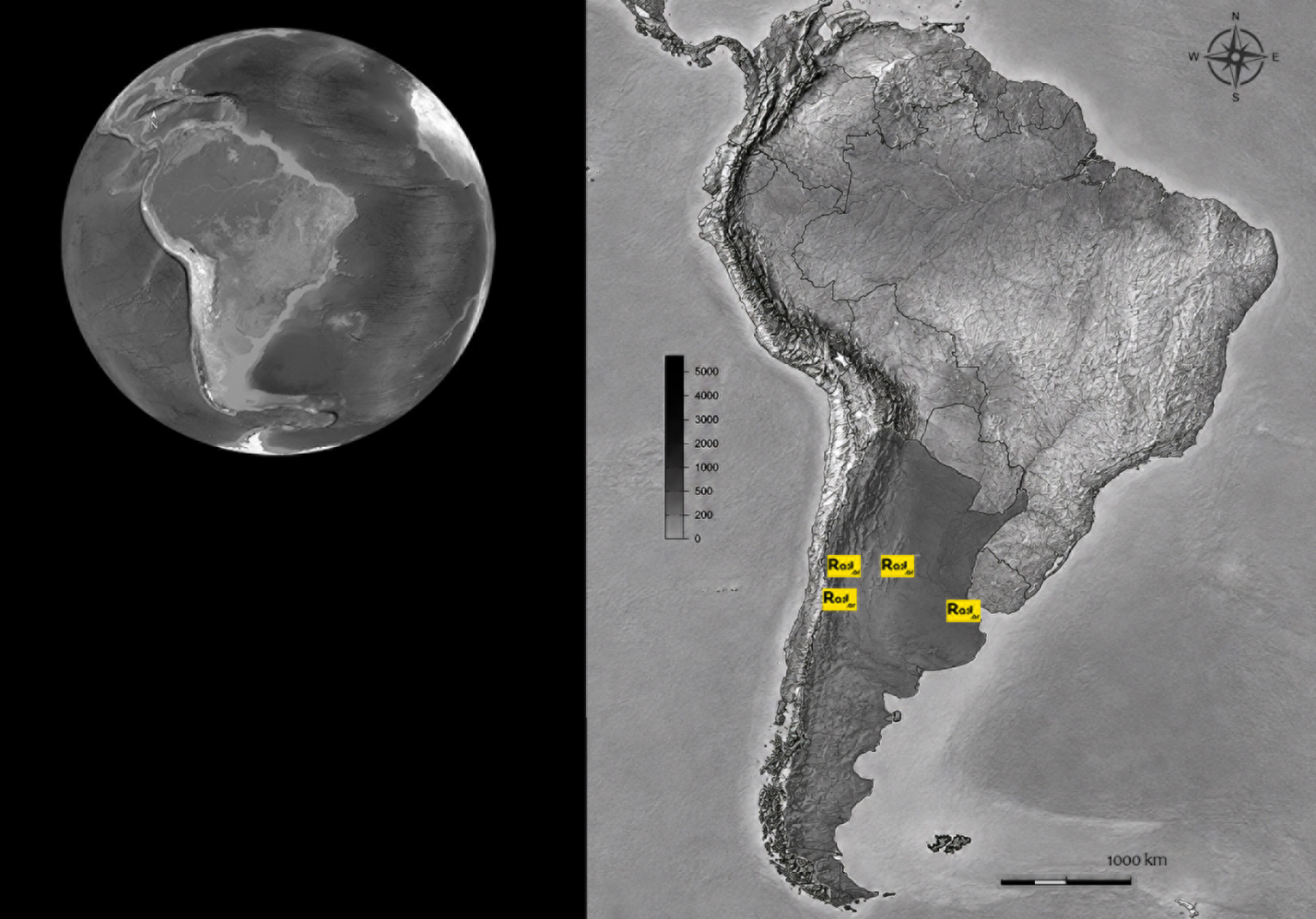
Rad.Ar (Radon Argentina) is a non-profit scientific research project composed of researchers, technicians, educators, and professionals from different disciplines and institutions across the country, with the aim of studying the effects of natural radioactivity on human health. This broad objective also involves understanding how land-use planning policies impact public health in different regions of Argentina. We study the environment from a holistic perspective, connecting water, soil, and air. This approach also includes examining the characteristics of the homes of the populations we study and their access to drinking water.
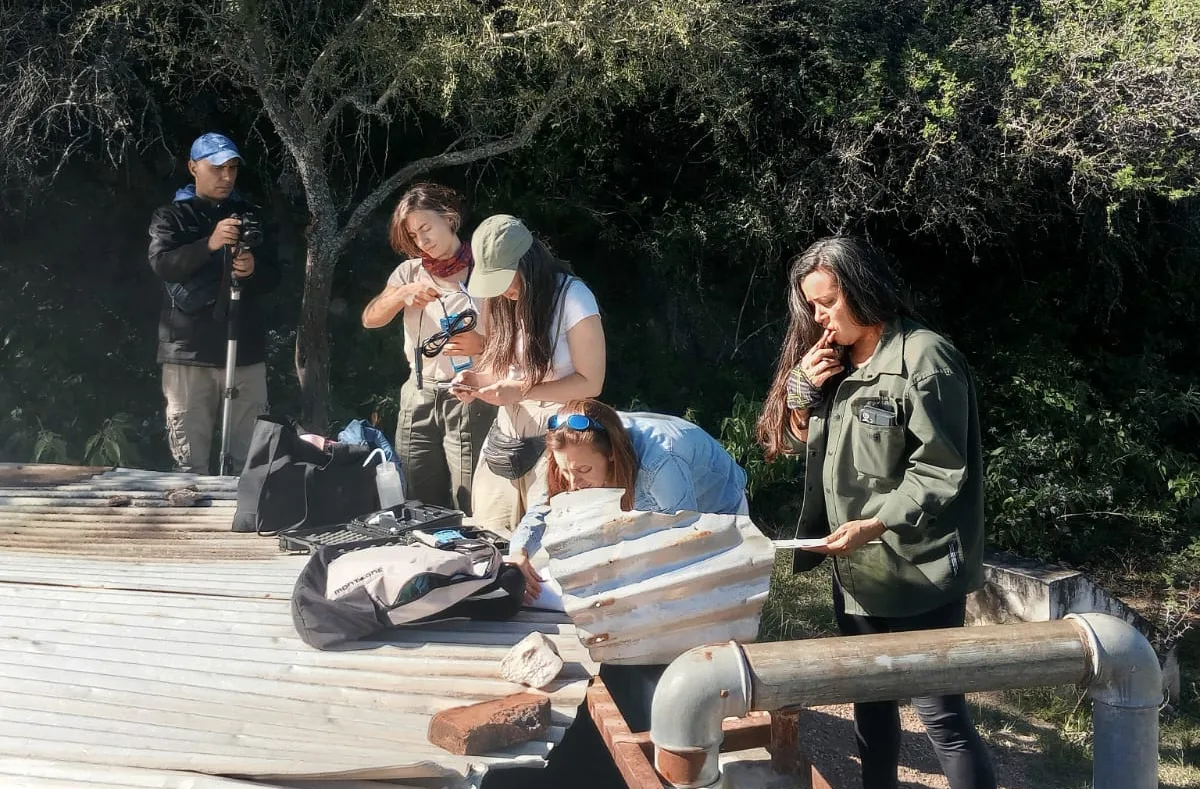
In particular, we focus on environmental carcinogenesis, and we believe that multidisciplinary dialogue based on data and mapping is the path toward addressing complex socio-environmental questions. For Rad.Ar, basic and applied science are two sides of the same coin. We also believe that the Citizen Science, involving local communities directly in scientific practice, is key to achieving meaningful results.

What is Natural Radioactivity?

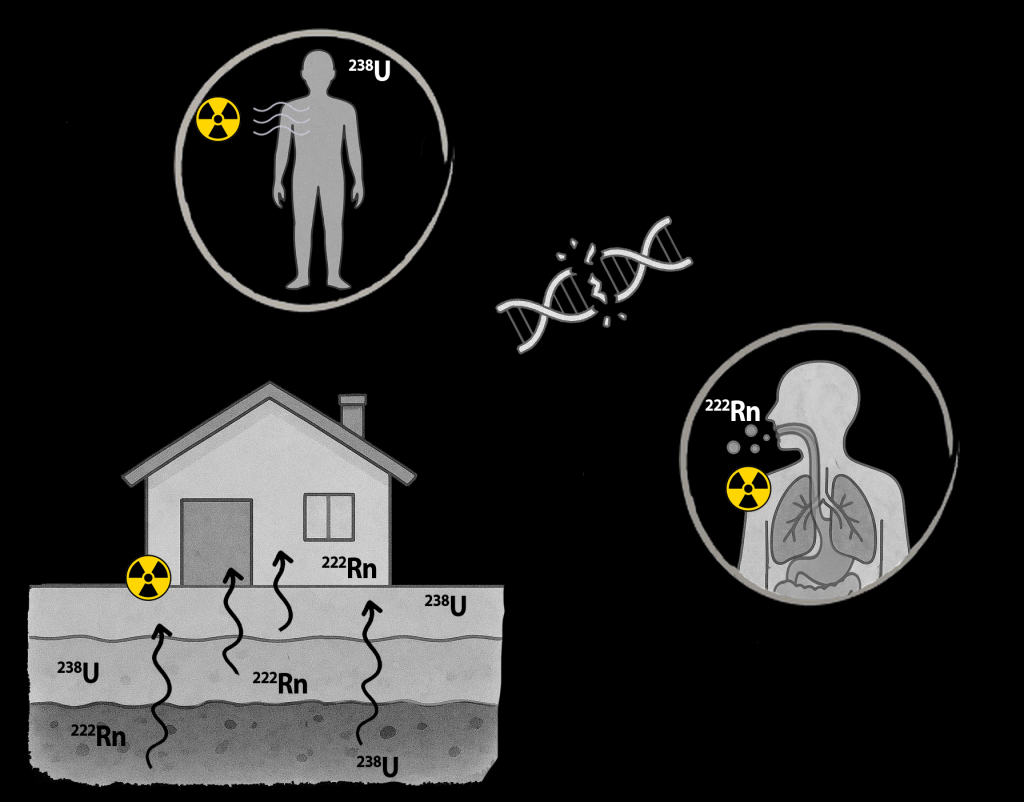
Radioactivity is the natural process by which an unstable atomic nucleus releases ionizing radiation in order to reach a more stable state, through the emission of alpha particles, beta particles, and/ or gamma rays. When these particles or energy pass through — or are released inside — the human body (entering through respiratory, digestive, or cutaneous pathways), they may cause molecular damage such as inflammation and DNA mutations, increasing the long-term probability of developing cancer. Human populations are continuously exposed to natural radiation, globally estimated at an average annual dose of approximately 2.4 mSv, derived from rocks, soil, water, food, and cosmic rays. Approximately half of this radiation exposure is attributed to radon gas (222Rn).

What is Radon?

Radon is a radioactive noble gas produced by the decay of the uranium (238U) series. Rocks and soils containing 238U generate radon, which subsequently decays into other radioisotopes — known as progeny — until reaching the stable form of lead (206Pb). Radon abundance can also be significantly higher in areas affected by active crustal faults, which facilitate the upward migration of gases.

Radon and its progeny are classified as Group 1 carcinogens by the World Health Organization, as they constitute the leading environmental cause of lung cancer and the second leading cause after smoking. Radon danger lies in their accumulation indoors, as this gas can enter buildings from the underlying soil through pores, fractures, and even water supply systems. When a person inhales radon at high concentrations over prolonged periods, the probability of developing lung cancer increases significantly.